


To get a Doja Cat-style vocal in Logic Pro X or GarageBand, record a bright, close lead, tune it lightly, compress it at about 3:1, and lift the air around 10 to 12 kHz. Then stack airy harmonies panned wide and add a short slap delay. Use a separate, more tightly compressed track for rap sections so they feel punchy.
This guide gives stock-plugin starting settings for that sound, as listeners usually describe it: switching between sung pop and rapped verses, airy stacked harmonies, playful character voices and a bright, polished modern pop finish. We use that description as reference listening only. We do not know the artist's real plugins, settings or studio chain, so treat every value as a starting point and adjust by ear. To load a finished chain, see our Logic Pro vocal presets or our GarageBand vocal presets.
Thir13een is not affiliated with, endorsed by or connected to Doja Cat or anyone who works with her. "Doja Cat-style" names a sound we aim to approximate, nothing more.
What does a Doja Cat-style vocal sound like?
People who describe this sound usually mention range and personality first. One song can move from a smooth, melodic hook to a fast, rhythmic rap verse, and sometimes into a cartoonish or breathy character voice. The mix stays bright and clean, with a lot of sparkle on top and harmonies that float around the lead.
Most of that comes from performance and arrangement, not from a plugin. A chain can add polish, but it cannot supply the switch in attitude between sections. Record each style with its own energy, then give the sections their own tracks so each gets its own processing. Match what you hear in reference tracks of your own choosing.
What are good starting settings for a Doja Cat-style vocal?
Use this table on a clean, dry vocal. It uses stock plugins, so it works in Logic Pro X and in GarageBand on Mac. Logic Pro names come first. Change one setting at a time and judge it against the full beat.
| Stage | Plugin and parameter | Starting value | Why |
|---|---|---|---|
| EQ | Channel EQ, high-pass | About 90 to 100 Hz | Keeps the pop vocal clean and light |
| EQ | Channel EQ, low-mid cut | Cut 2 to 3 dB around 250 to 350 Hz | Clears boxy sound from a close mic |
| EQ | Channel EQ, air shelf | Boost 2 to 3 dB above about 10 kHz | Adds the bright, glossy top end |
| Pitch | Logic: Pitch Correction plugin, Response. GarageBand: Pitch Correction slider and Limit to Key in the audio region editor | Medium response; slider about 40 to 70 percent. Set the key and scale of your song | Keeps the melody polished but still human |
| Compressor | Ratio | 3:1 on the lead, 4:1 on rap sections | Evens out sung lines and keeps rap verses forward |
| Compressor | Attack / Release | Attack 10 to 20 ms, Release 60 to 100 ms | Keeps the start of each word and recovers before the next |
| De-esser | DeEsser 2 (Logic). In GarageBand, use a narrow Channel EQ cut near 6 to 8 kHz | Around 6 to 8 kHz, reduce 2 to 4 dB | Controls "s" sounds that the air boost brings out |
| Delay | Stereo Delay (Logic) or Echo (GarageBand), on a send | About 80 to 120 ms slap, feedback under 15 percent, send low | Adds bounce without cluttering the words |
| Reverb | ChromaVerb (Logic) or Reverb send (GarageBand) | Plate or small hall, under 1.5 seconds, low level | Adds gloss and space while the words stay clear |
How do I stack airy harmonies?
Harmonies are a big part of the pop side of this sound. Follow these steps in either app.
- Record and tune the lead first, so the harmonies follow a finished melody.
- Record one take a third or a fifth above the lead on key phrases, singing softly and close to the mic.
- Record a second, lower or octave-up take for more width.
- Pan the harmony tracks left and right, about 30 to 60 percent each, and keep the lead in the center.
- Lower the harmony tracks 4 to 8 dB under the lead.
- Apply the same Channel EQ air boost to the group, and send the group to a little more reverb than the lead.
In GarageBand, record each take on its own track. In Logic Pro X, you can place all the harmonies in a summing stack so one set of plugins covers them. Keep them subtle, because the goal is a halo around the lead, not a choir.
How do I switch between rap and singing?
Split the song onto two lead tracks. Put the sung hooks on one track and the rapped verses on the other. Give the rap track the tighter 4:1 compression, a presence lift of 1 to 2 dB near 3 to 5 kHz and less reverb. Give the sung track the lighter 3:1 compression, the air shelf and more space.
The advantage is control. You can automate each track, ride the levels on its own and change the effect sends without touching the other section. For rapid-fire verses, our rap vocal chain guide shows a full signal order.
How do I make playful character voices?
Record the line in a different tone, such as higher, nasal or breathy, then process it on its own track. In Logic Pro X, you can change the pitch of a region or use the Pitch Shifter plugin by a few semitones. In GarageBand, use the pitch controls in the audio region editor on a copy of the take. Add a bit more delay and a narrower band of EQ, so the voice feels like a separate character. Use it sparingly, so the effect stays a surprise.
How do I do this in GarageBand?
On Mac, select the vocal track, open the Smart Controls, and use the Plug-ins section to add Channel EQ and Compressor. Use the Pitch Correction slider in the audio region editor, and the Reverb and Echo sends in the track controls. GarageBand has no DeEsser plugin, so use the narrow Channel EQ cut from the table. iOS layouts differ, so we list no iOS-only values.
Stock plugins or a preset: which should I use?
The stock chain above is free and enough for a finished mix. A preset saves time, because the chain is already built and you tune it to your voice. We do not claim any preset reproduces an artist's voice. A preset is a starting chain, nothing more.
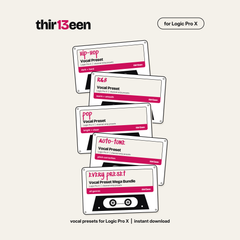
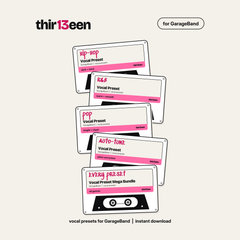
For polished pop sections, the Chart-Topping Vocal Preset Bundle for GarageBand is a good fit. It is an instant digital download. See every option in the GarageBand vocal presets collection.
Logic Pro X user? You can download Toronto Warmth, our free preset for Logic Pro X. It is built for Logic Pro X, so it only helps if you also use Logic. For more options, see the Logic Pro vocal presets collection.
More vocal style guides
- Vocal sounds by artist: every style guide in one place
- Bad Bunny-style vocals in Logic Pro and GarageBand
- Kendrick Lamar-style vocals in Logic Pro and GarageBand
- Juice WRLD-style vocals in Logic Pro and GarageBand
FAQ
Is there a free Doja Cat-style vocal preset?
We do not sell a preset made for this sound. Our free preset, Toronto Warmth, is for Logic Pro X and is not built for it. The stock chain on this page is free in both apps.
How do I get a Doja Cat-style vocal in GarageBand?
Keep the lead close and bright, add Channel EQ and Compressor, use the Pitch Correction slider with Limit to Key, and add Echo and Reverb sends. Record harmonies on separate tracks and pan them wide.
Does she use a lot of pitch correction?
We do not know her settings. This guide uses a medium response for a polished but natural sound. Lower the slider for a more natural result.
Is this made by or endorsed by Doja Cat?
No. Thir13een is not affiliated with, endorsed by or connected to Doja Cat.


